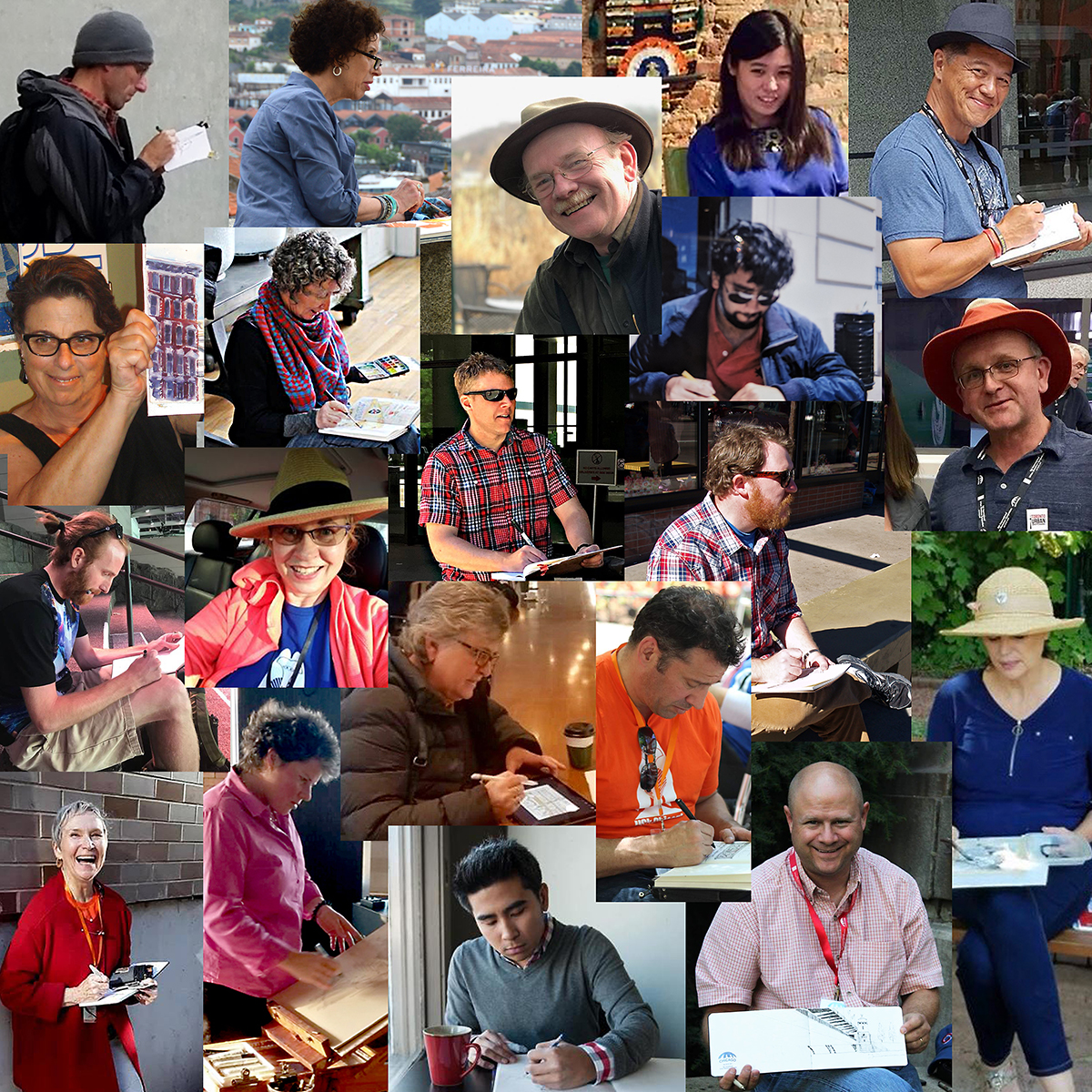
Meet the Instructors!

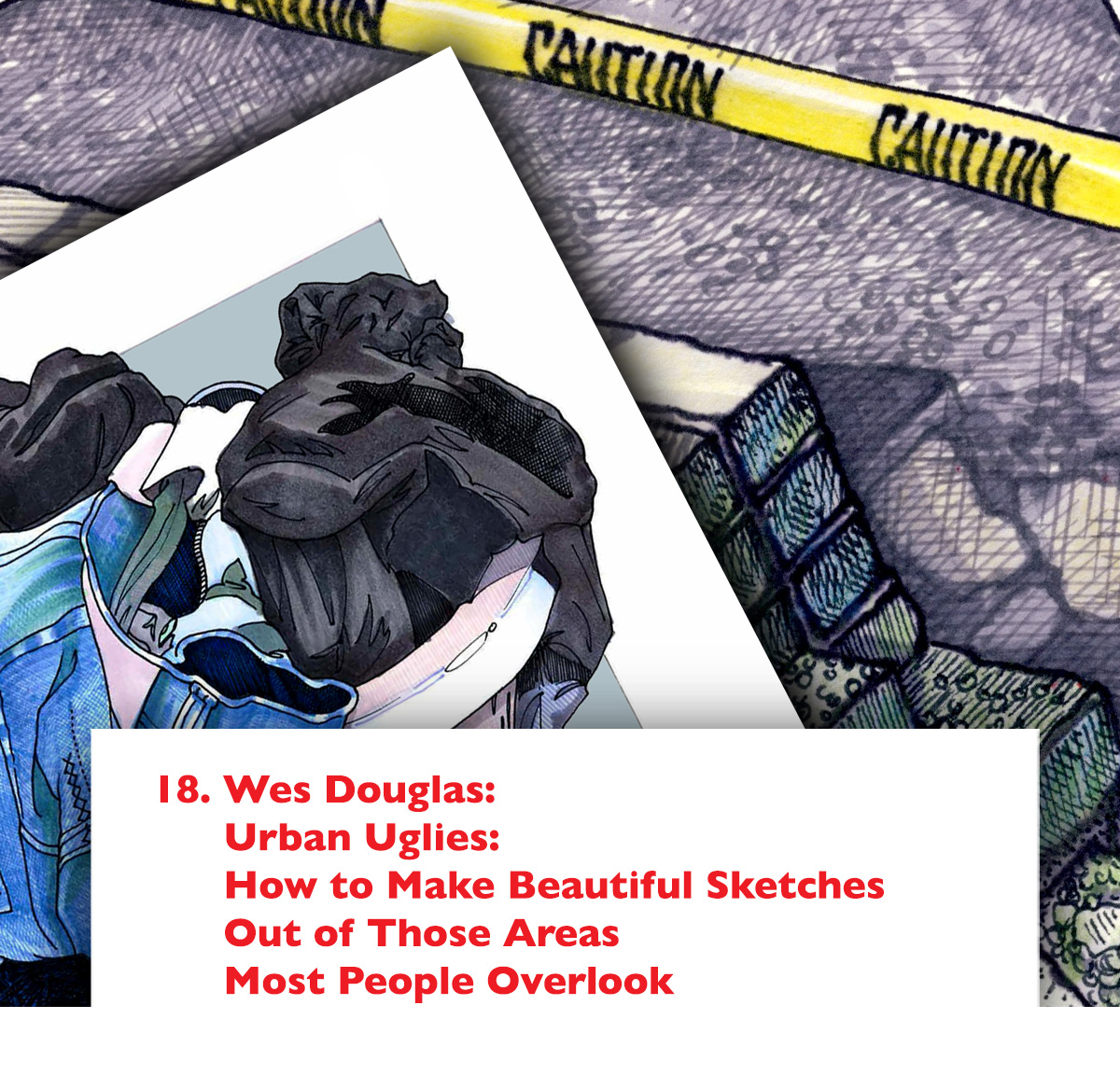
Meet Wes Douglas!  Workshop 18: Urban Uglies: How to Make Beautiful Sketches Out of Those Areas Most People Overlook

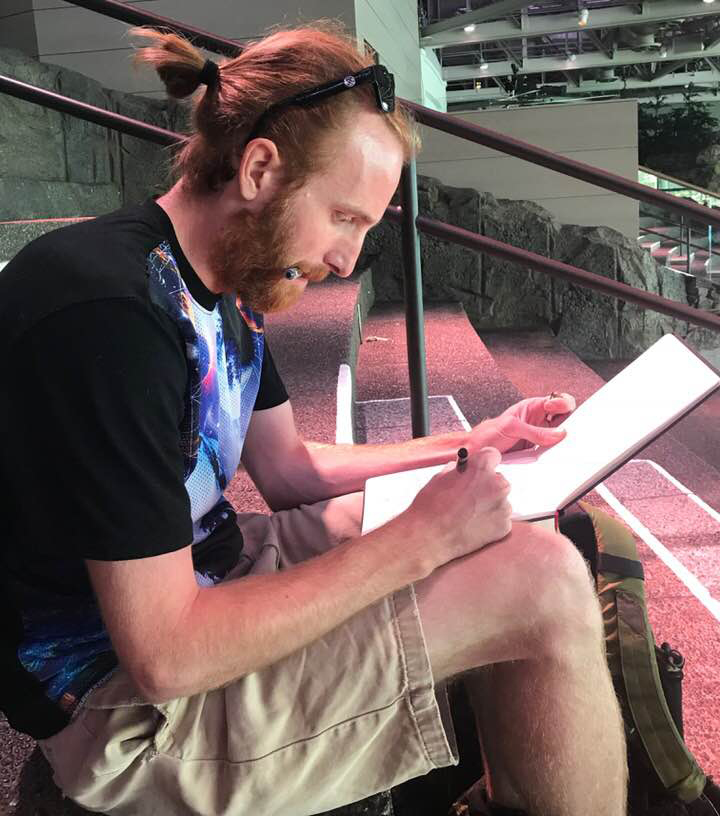
Wes Douglas is an award-winning art director, illustrator and co-founder of the Elmhurst-based innovation agency Maddock Douglas, Inc. In addition to his creative role at Maddock Douglas, Wes also developed “Speaker Sketches” (his unique creative meeting notes which blend hand-written words and sketched pictures), concept visualizations, and package designs. He is also the primary book illustrator for the Amazon best-seller Free The Idea Monkey (to focus on what matters most) by Mike Maddock. Wes has been a co-admin for the Chicago chapter of Urban Sketchers since 2013.

Wes loves to share what he has learned about sketching and has a lot of fun in the process. In the summer of 2017, as part of his public relations duties, Wes appeared on WGN Morning News and WGN Radio AM 720 “Outside the Loop” programs to share his passion of urban sketching with Chicago listeners and to promote upcoming Sketch Seminars and the 8th International Urban Sketchers Symposium.

Wes has also lead demonstrations on urban sketching people for the DuPage Art League in Wheaton, a demonstration on marker illustration at the American Academy of Art, and will soon be leading a demonstration on urban sketching people at the Kishwaukee Valley Art League in Sycamore.
Meet the Instructors!

Say hello to Aaron Elswick! Workshop 1: Fake It Till You Make It: Sketchin’ Like You Don’t Care

Aaron is a Chicago-based Urban Landscape Architectural Designer and Urban Sketcher. A Kentucky native, his passion and curiosity lies at the intersection of science, art and design. His favorite places to visit and draw are all full of life and color, and range from dense and urban to vast and natural environments. To better design such types of places in his professional career, he seeks them out in his free time to explore their beauty via his sketchbook. With his approach, the drawing process is utilized to gain understanding, insight, and at times, inspiration.

Drawing is the tool and the language Aaron uses in his career to communicate, explore ideas, and to design cities of the future. Urban Sketching is how he practices. He has added mediums to his urban sketching throughout the years, but his objective has remained the same – to capture what he sees as fast and legibly loose as possible.

Becoming a member of USk Chicago has had a tremendous impact on Aaron’s life, both personally and professionally. The art of urban sketching can only be described as beautiful, and he’s looking forward to sharing it with everyone who attends his workshop.

Meet the Instructors

Say hello to MJ Ernst! Workshop 2 : Fountain Pen World

MJ Ernst lives in Chicago and is the owner of a custom made dress shop. She grew up in a small town in West Michigan and has been an artist her entire life.  MJ uses all types of medium for sketching and enjoys testing the creative limits of inks, especially water-solubles. Her quick sketch style is impressionistic and whimsical. MJ‘s urban sketches tend to include people, interiors and nature. She loves to challenge herself with interesting compositions and seeks out sketching opportunities that promote her growth as an artist. 

In May 2018 MJ participated at the Chicago Pen show as a demo artist and introduced her use of water soluble inks and fountain pens to the show’s attendees. This spring MJ will be teaching ink sketching classes for children and adults at the Nuveen Art Center in Whitehall Michigan.

MJ is an also Administrator with USK Chicago and has been a member for 3 years. She helps organize monthly sketch crawls and run the USk Chicago Instagram account. MJ is also the Sponsorship coordinator for Chicago Sketch Seminar and maintains Sponsorship relationships throughout the year.


Here’s to a Successful Workshop Experience!

Art workshops and seminars abound. We’re less than a day away from registration for USk Chicago Sketch Seminar 2019 which offers  a wide selection of eighteen classes! It’s hard to believe this is our FIFTH seminar!  We have some great things planned and we’re working on the details to help you get the most out of your workshop experience.

How about you? Are you getting ready to join us for a workshop?  But whether it’s with USk Chicago, an online class, or even if you’re working your way through a self-study book, there are certain things that will  help you get the most out of the experience. Over the years i’ve given workshops and taken many classes both on-site and online. Whether it’s a first choice at registration or third choice,  I’ve  found my mind set is the most important factor in what I take away from the class.

• SET A GOAL – Why am I taking this class? What do I hope to learn?

• KEEP AN OPEN MIND – Pay attention and follow directions. It’s easy to fall into the attitudes of “that isn’t the way I do it” and “that isn’t the way so-and-so does it”. Leave those notions behind at least for the duration of the workshop.

• THINK PROCESS NOT PRODUCT (I know I say that all the time) – It takes practice to learn new techniques and methods. Don’t be too hard on yourself.

 and last but not least

• ASK QUESTIONS – Your instructor wants you to get the most out of the class.

All the workshop descriptions list things to bring to class. Add one more important thing you need for a successful workshop experience, that’s a positive and open workshop-state-of-mind. Have fun!

Ready, Set…

It’s almost time! Are you ready? Registration doors open Saturday, March 16 at 10:00 a.m. Chicago time (CDT).

All eighteen (!!!) workshop descriptions are listed here on the blog. With so many exciting choices it’s helpful to go to the list and make your choices now. You may want to make a few back-up picks in case you are closed out of some workshops. The schedule is here, too. You can scroll down and see previous posts or click on the tabs at the top of the blog for more registration information. 

We’re ready to get this party started. How about you?

Workshop 18

INSTRUCTOR

Wes Douglas

DESCRIPTION

As sketchers, we are constantly looking for a picturesque scene to capture in a sketch. But have you ever thought of sketching a puddled alley, an overflowing dumpster, gas meters, or rusted, dented old, lackluster cars? Sometimes the scene might strike you as boring or unexciting until you learn to look at it differently.

In this workshop, we will go in search of those ugly areas that most cities try to ignore or hide and find out that we can make beautiful sketches and paintings. But don’t worry, Wes will also make sure you will be safe in the process as well. Wes will show you what tools to bring, how to look for the excitement in a gritty object or scene and how to turn that into sketches that make people go “How did you ever see that in a pile of trash?”

LEARNING GOALS

  • Observation Skills: What are the things most people ignore or look past that you can make more interesting?
  • Composition Tips: Keep your focus on one or two objects rather than a whole scene.
  • Texture and Color: You will learn how to make a dull, lifeless object into a beautiful subject.

SUPPLY LIST

  • Sketchbook of your choosing, your favorite pencil/eraser and pen
  • Bring other supplies that you are most comfortable with (but travel light). If you like watercolors, colored pencils or markers, bring a small set if possible.
  • Please bring a portable chair or stool to sit on in case seating is limited, a filled water bottle to stay hydrated and appropriate dress for the weather.

Please note: this workshop will require lots of walking between sketches. We do not expect it will be accessible to drive your car to the locations.

Workshop 17

INSTRUCTOR

Shari Blaukopf

DESCRIPTION

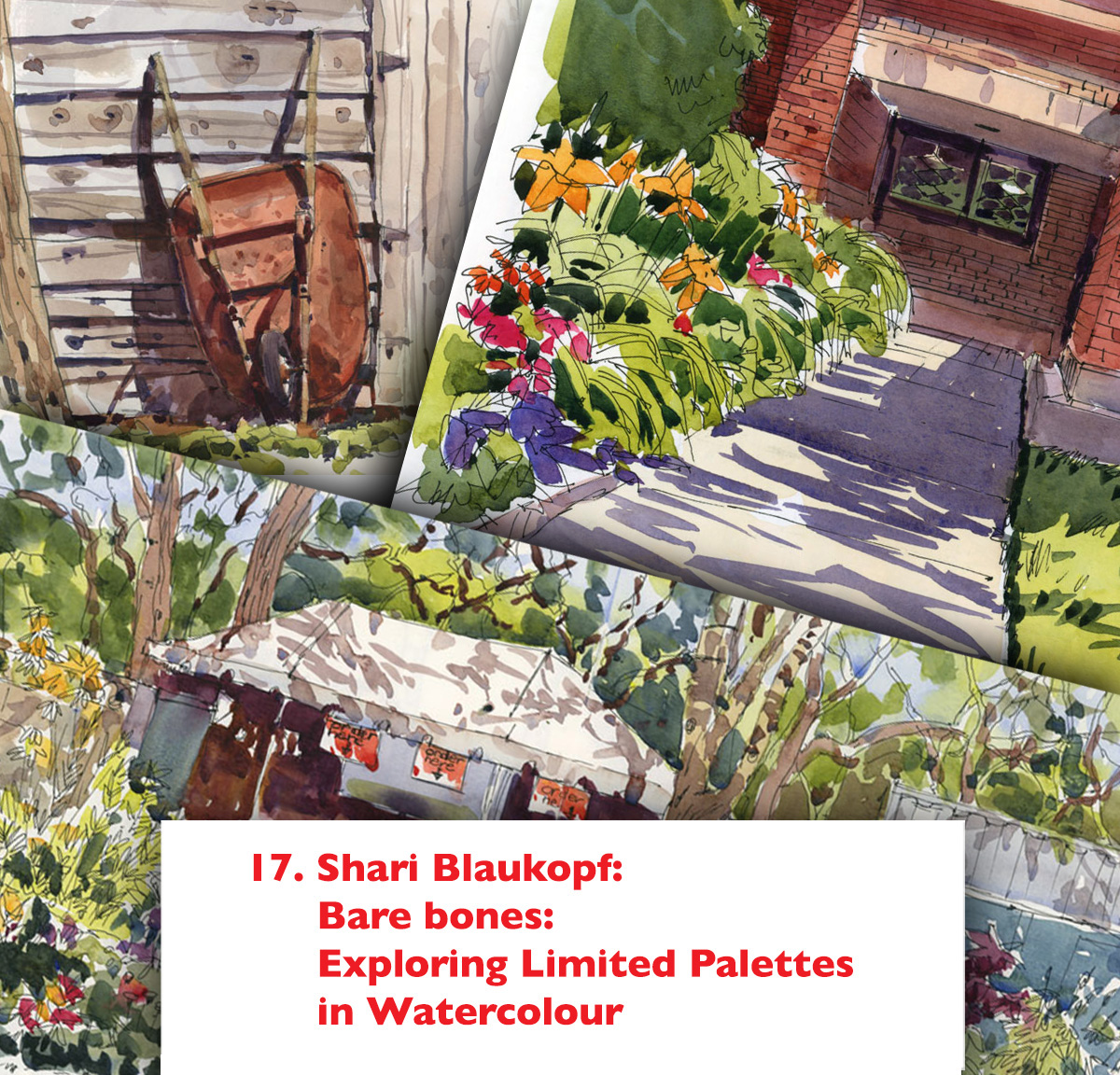
You never know where accidents will take you. Recently some Cobalt Teal pigment leaked all over my palette, and the next time I went out to sketch I was determined to use it up. It made its way into all my sketches for quite a long time, and in the process it led me down a new path with colour. Most of us tend to always dip into the same wells: green for trees, blues for sky. But what if the sky is yellow? Or the trees purple? The idea for this workshop is to open participants’ minds: to give them fresh ideas and options for using vibrant and luminous combinations of colours, as we explore two and three-colour combinations of pigments.

LEARNING GOALS

In this workshop participants will explore new ways of working with colour through limited palettes: brights, neutrals and opaques. We’ll see how painting the same scene in different ways changes our perception of the place. Students will be encouraged to move out of their comfort zones and explore new colour combinations.

In this workshop we’ll look at:

  • Exploring new triads of colour, both bright and muted
  • Creating a centre of interest through use of pure colour
  • Creating unity in our sketches by limiting our colours
  • Retaining luminosity and keeping colours fresh
  • Defining value relationships and creating lively darks through a wet-in-wet approach and modifying viscosity of paint

SUPPLY LIST

  • Good quality watercolours, either in tubes or fresh pans: hansa yellow, new gamboge, yellow ochre, cadmium red, permanent alizarin crimson, quinacridone rose, burnt sienna, ultramarine blue, cerulean blue, cobalt blue, prussian blue, phthalo green. 
  • Portable watercolour palette
  • Watercolour sketchbook (Moleskine or other) or loose sheets of watercolour paper on a backing board
  • Small plastic water bottles
  • Brushes: medium size round (size 8-10), small round for details (size 3)
  • Pencil, pen for drawing
  • Bulldog clips, kneaded rubber eraser, paper towels
  • Small folding stool

Workshop 16

INSTRUCTOR

Paul Ingold

DESCRIPTION

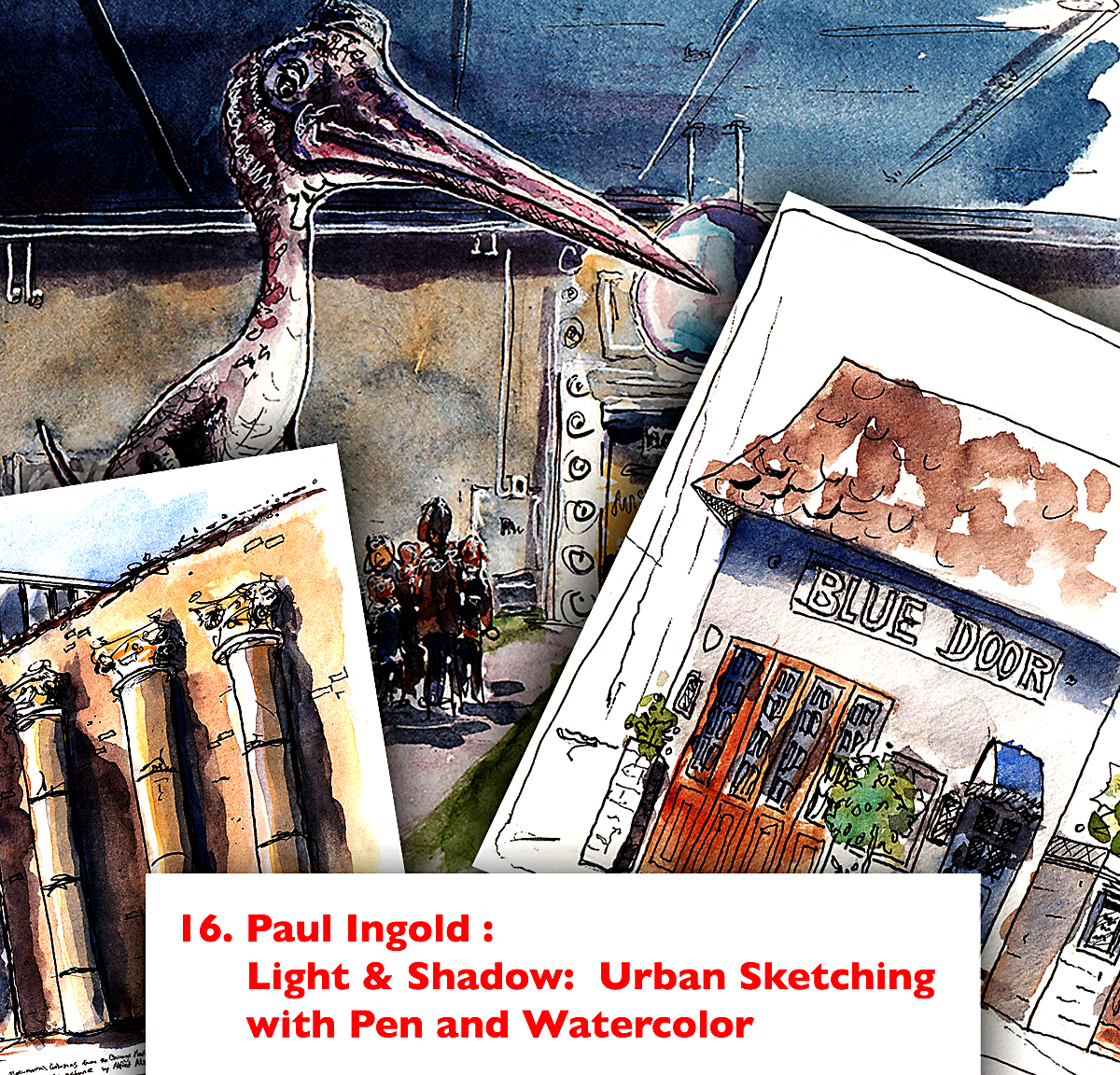
This workshop will focus on adding depth and value to your urban sketch using pen and a minimal watercolor palette.  The demonstration will walk through Paul’s thought process as he considers what he’s seeing and decides how to approach the sketch.  Specifically, the demonstration will discuss the angle of light, where shadows fall, and how to get started in a potentially overwhelming location.  You will then have time to experiment with light and shadows in a quick sketch exercise.  After a friendly group review (not a critique!) of sketches, you will continue to hone your skills through three 20-minute sketches.  This workshop will conclude with another group review and discussion.

LEARNING GOALS

In this workshop, participants will:

  • learn how to start a quick urban sketch with pen and ink without being overwhelmed by the busy city environment;
  • identify and apply a range of values; and
  • Practice adding watercolor to enhance their pen and ink drawing, focusing on a consistent angle of light and where the shadows fall

SUPPLY LIST

  • Sketchbook (watercolor or multimedia weight)
  • Pencil 
  • Micron pens or similar type of pens
  • At least three to four watercolor tube or cakes. (The Windsor & Newton pocket palette is a great option)

INSTRUCTOR’S SUPPLIES

Paul will focus on only using these colors (depending on location conditions):

  • Yellow Ochre
  • Burnt Sienna 
  • Indigo, or Ultramarine Blue
  • (Optional) Cerulean blue
  • (Optional) Sepia

Workshop 15

INSTRUCTOR

Paul Heaston

DESCRIPTION

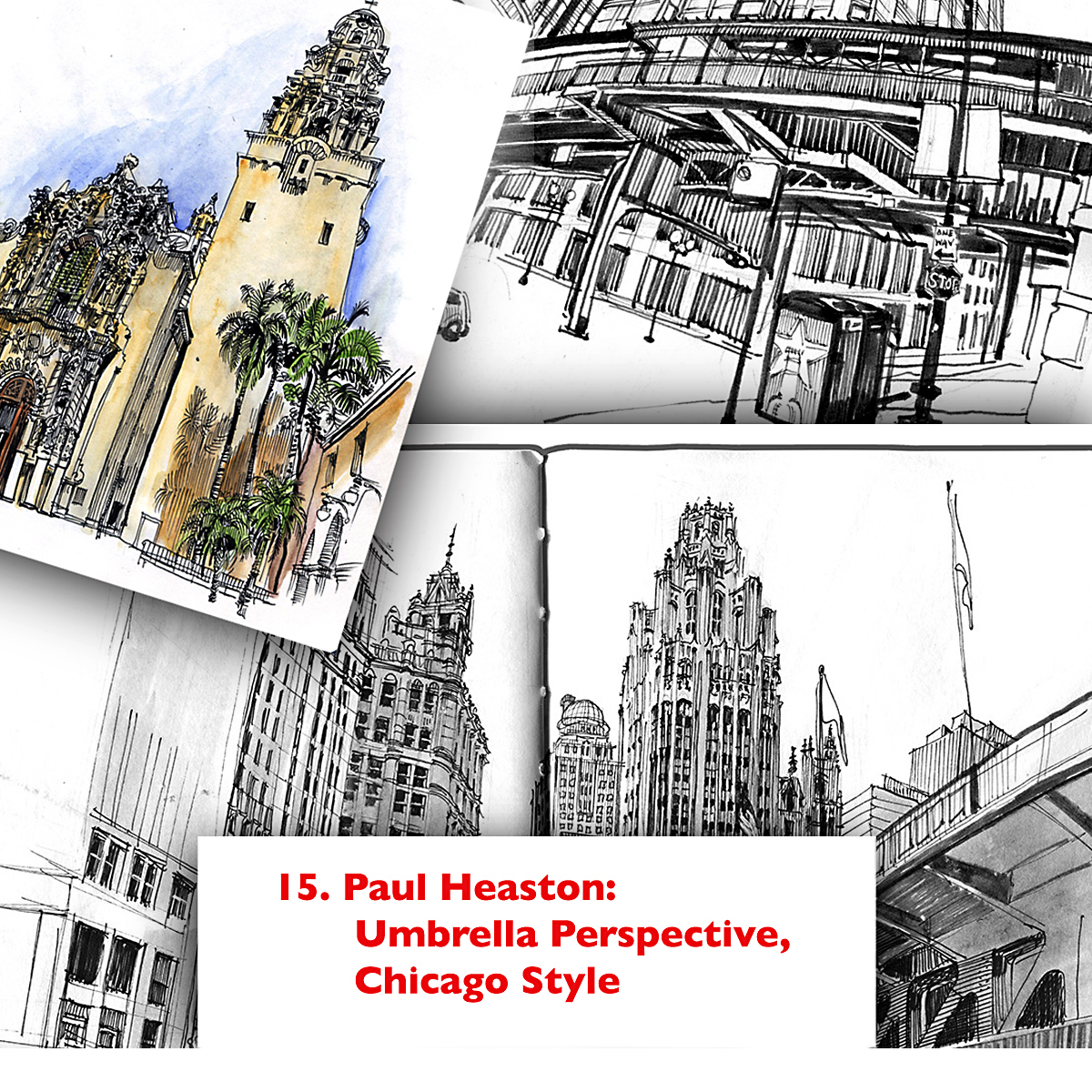
In this workshop we will learn how to draw “curved” space in a technique I call Umbrella Perspective, but with a Chicago twist! We will apply specific strategies of thinking about in perspective to create sketches that appear curved or spherical, not unlike a photograph taken with a “fish eye” or wide angle lens.

So-called “curved” perspective has become a fun and novel approach in urban sketching, but it can also feel a bit confusing when it comes to how to begin your sketch. This workshop will take some of the mystery out of terms like “curvilinear” and “spherical” perspective and even simple-sounding words like “wide angle” and “fish-eye” that are descriptive but don’t give the sketcher any insight into where to start. 

LEARNING GOALS

  • Go over basic 1, 2 and 3-point perspective with emphasis on intuitive concepts
  • Apply “umbrellas” to receding edges and lines in the cityscape to create curved perspective drawings
  • ’Seeing’ relationships between objects versus ‘naming/defining’ objects
  • Understanding scale relationships and proportions
  • Foreshortening and angle-finding through ‘sighting’
  • Economizing visual information and selecting detail

SUPPLY LIST

  • Hard light pencils  that are easily erased (recommend 4H – 6H)
  • Durable eraser (white plastic/vinyl recommended)
  • Media of your choice to complete the sketch